

Upgrade Your Membership
The process for upgrading your membership will vary based on your background. Ensure that you are at the appropriate membership level that reflects your role, experience and qualifications. There is a standard route and an individual route, both of which follow the process described below.
If you would like to start your upgrade process, or if you have any questions, please contact our membership team.


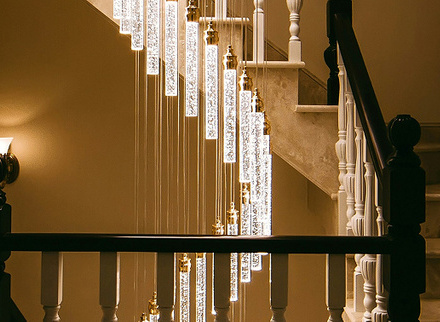
The Upgrade Process
 The Process
1. Initial Assessment Review
After making your initial enquiry regarding the upgrade of your membership you will be invited to an Initial Assessment Review. This is held via Teams and will last approx. 20-30 mins. It is your chance to meet your assessors and between you discuss the best grade and route that is achievable and relevant to your knowledge and experience.
In the majority of cases, you will know at this step what grade and route you will be applying to upgrade to.
2. Application Documents
- Application Form - Remember to sign and date this form. Your Proposer or Seconder should be at the same level as you are applying for or above. They do not have to be a member of the ILP.
- CV – This will ideally include your last 3 years within the Lighting Industry it should be as detailed as possible and include your roles & responsibilities.
- CPD – we require records for the preceding 2 year amounting to 30hrs per year.
- CPD – forward plan for the next 12 months
- Evidence of Higher Education – This is important as it can determine the route to membership. Check here to see if your qualification is accredited
3. Competency Statement & TR Synopsis
Your full application will be assessed and if approved you will be asked to prepare and map your Competency Statement to UPSPECv4 competencies. Maximum of 6 A4 pages.
Technical Report Synopsis Please Note depending on which route you have been recommended (Standard or Individual) you will be asked to also prepare your Technical Report Synopsis. This should be no more than 750 words, and you should consider choosing a project on which you have worked.
4. Technical Report
Once your Competency Statement and Technical Report Synopsis have been approved and depending which route you have been recommended (Standard or Individual Route) you will then need to prepare your Technical Report this will typically be between 3 -10,000 words focusing on quality rather than quantity and using AHEP skills.
5. The Interview(s)
Your Technical Report has been approved (Individual Route) you are now invited to Interview.
Technical Report Interview (Individual Route): This interview will be based around your technical report. Once the paperwork for this interview is completed, and providing the score is high enough, you are given a second interview.
Professional Review Interview (Individual & Standard Route) - Professional Review Interview - includes all the non-technical aspects required by ECUK Competencies
Both interviews will be on the same day and last approx. 2 hours
6. Upgrade Approval
Interviewers make a recommendation to the ILP Membership committee and once approved you are notified, and you can immediately use your new ILP grade. Your upgrade is registered with the Engineering Council, and you will receive your registration pack within a few weeks.
 Competency Statement
A competency statement must include:
- Full details of your competence, experience and responsibility, including the type of work and projects in which you have been involved (e.g. design, development, maintenance, project management etc.) indicating your own contribution and level of personal responsibility
- Evidence mapped across to AMILP Competency Requirements or MILP Competency Requirements to show that all necessary competencies are fulfilled. This is based on EC UKSPEC and applies to all applicants, whether non-engineers or engineers.
- A list of at least three projects in the required format, covering all the competency requirements.
- Brief details of employment for at least the preceding four years.
- Your competency statement should cover a maximum of six A4 pages.
 Technical Report
Purpose of the Technical Report Option
The purpose of the Technical Report Option (TRO) is to improve accessibility to registration with the Engineering Council whilst maintaining standards. These standards are detailed in the UK Standards for Professional Engineering Competence (UK-SPEC). The TRO is one of several possible options, and the ILP will advise you whether this is an appropriate one for you. If invited to proceed with the TRO you should be able to show that you have gained the same level of knowledge and understanding of engineering as someone who has the exemplifying qualifications.
The TRO Process
1. Prepare: Submit a synopsis & arrange a mentor.
- Set out clearly how you intend to demonstrate your technical competence
- Identify the lighting principles involved
- Find the right topic by considering a project or activity that you found challenging, interesting or enjoyable. Did you cover the lighting principles involved? Is there scope to consider other solutions? If applicable, is there sufficient engineering content to allow you to demonstrate the outputs of a Chartered or Incorporated Engineer (refer to the EC UKSPEC)
- Prepare a maximum of 750 words
Focus on demonstrating your understanding of lighting principles with regard to the following:
- how you have developed an appropriate level of experience in your particular field.
- what technical judgements you have used when applying lighting principles and your ability to locate & use new research.
- what you have used by way of established analytical or design techniques to solve problems.
- your ability to apply methods that may be indeterminate or non-routine.
The ILP Assessment Panel will review your synopsis to ensure that you are on the right path and are covering the relevant areas. You should not be put off by the fact that nearly all synopses are commented on requiring further work – this is the whole purpose of the initial assessment – it is there to help you.
2. Write the Technical Report
Your report should:
- be between 3,000-10,000 words. Focus on quality rather than quantity – be as concise as possible
- offer an ordered and critical exposition of some aspect or aspects of lighting practice in which you have played a major part
- define the technical problems involved and demonstrate how you resolved them by the application of lighting principles and knowledge
- show that your experience fully compensates for the lack of your formal academic qualifications
- be framed with an introduction, aim, discussion and evaluation
- be self-contained, and not rely on other papers unless they are provided in appendices.
- flow logically from start to finish
- be typed in English
- be signed by you and your mentor
- not be stapled or bound
- be either the product of your original thoughts and work or referenced to the original author. It must be clear what elements of the work are your own.
Submissions may take a variety of forms including:
- a collection of reports on design or maintenance projects, with a commentary and connecting dialogue indicating how the material meets the objectives for the Review
- a specialist paper based on a design or maintenance project(s)
- a report on original work carried out by you.
You are not expected to demonstrate advanced mathematical or computing abilities. Your report may include calculations and drawings. Your report does not need to demonstrate management experience or skills.
Subdivisions of the report typically might be:
- Title
- Introduction – What the report is about.
- Aim – How does the report meet the requirements?
- Background – Setting the scene. Where does the project lie in relation to the ‘total picture’?
- Technical Content and Description – Draws out the fundamentals underlying the subject(s). The report must not simply demonstrate the application of codes and standards but must illustrate your understanding and application of lighting principles. Appropriate mathematical analysis should be included. Diagrams or drawings should preferably be close to the relevant text.
- Conclusions- In relation to the application of lighting principles, what were the successes and failures?
- Evaluation and Reflections / Lessons Learned – What were they?
- Appendices- For supporting detail, if appropriate.
- Bibliography- If appropriate
3. Checklist
You are strongly encouraged to ask yourself the following questions before the final submission:
- Have I kept to the original topics?
- Have I covered all the main points?
- Have I gone into sufficient depth to demonstrate that I understand the underlying engineering principles and can apply them in a rigorous and logical manner?
- Does the report describe what contribution I made, what I did and why I did it?
- Are the points that I make relevant to the topic, argument or outcome?
- Is the material that I use relevant?
- Have I supported my themes, calculations and arguments adequately by using relevant theory, examples and references?
- Have I set out my thought processes, what decisions I made and why?
- If I instigated any changes, have I explained why?
- Have I described and analysed the results, good or bad?
- Have I acknowledged all sources and references?
- Have I exposed any confidential sources, copyrights or industrial secrets?
- Have I written clearly?
- Have I adhered to the presentation guidelines?
4. Assessment of Technical Report
Your report will be assessed against the following criteria:
Underpinning Knowledge
- Lighting principles
- Understanding of design concepts including solutions to problems
- Knowledge and understanding of analytical methods and tools
- Awareness of appropriate developing technologies
Analysis and Application
- Use of relevant lighting standards
- Application of technical standards
- Appropriate design methods including the use of IT
- Knowledge of the limits of the given process/es
Abilities
- Creativity and innovation
- Use of theoretical principles to solve problems
- Communication skills including Presentation and Technical Report
The assessment outcome will be:
Applicant invited for further interview. OR Further supplementary information or action required by applicant.
5. Interview
If your Technical Report is assessed by the ILP as satisfactory, you will be invited to discuss it at a Technical Report interview.
At the interview you will be invited to make a brief presentation, after which you will be asked questions about what you have written. The assessment criteria above will be used in this process. This interview will be carried out by two interviewers who will have been appointed by the ILP Membership Committee to carry out this task. The interviewers are experienced and trained professional engineers, who are also registrants in their own right. They have received additional specific training in the application of the Technical Report Option and in interviewing applicants.
If you are successful at the Technical Report Interview, you will then be asked to attend a Professional Review Interview. This may take place on the same day. At this interview, your Professional Review will be considered again and you will be invited to update it by talking about recent developments in your career, together with updated and projected CPD achievements. Again interviewers are experienced and trained registered engineers with specific training in interviewing and the requirements of both UK-SPEC and EngC.
6. Decision
The recommendations from either the Technical Report Interview or both that interview and the Professional Review Interview will be made to the ILP Membership Committee, who will make the final decision. Following your interview, the paperwork will be made available to the committee who should give their decision within 2 weeks.
 Mentoring
Initial Professional Development (IPD) bridges the gap between education and gaining a professional qualification.
It is recognised that mentor supported training provides engineers with valuable assistance in completing their IPD, and progressing to the next step in the professional qualification process, the Professional Review.
The ILP has successfully provided training to a consistently high level and, in order to provide a degree of consistency, guidance notes have been produced to assist mentors and mentees in their role.
In the latter sections of this document guidance is also provided relating to the training needs and criteria set for an individual wishing to become professionally qualified as member of the ILP.
All the notes produced in this document are intended to aid discussion between the mentor and mentee for their use/reference.
 Fast track to EngTech AMILP
If you are an Affiliate, the ILP Lighting Diploma Completion Project may be used to fast track through to EngTech AMILP in place of formal academic qualifications. However, it is not something which is awarded automatically. Students must follow the procedure given below if they wish to be assessed for EngTech AMILP.
Students should endeavour to make a presentation on the Module C course, as this is a necessary part of the Engineering Council’s (EngC) requirements for EngTech registration. Students who have already completed their Module C and haven’t been part of a presentation may be assessed with a short interview either in person or by other media.
Students should read the EngC requirements for EngTech and should map their projects across to the UKSPEC competencies (4th edition), as per the example below.
Once the projects have been marked and results returned, successful students may apply for EngTech AMILP. It would be unusual however for anyone with a score of less than a Credit to have attained the level of competence required.
Membership Upgrade Gallery
2026 Upgrades

Betty Atine

Jack Cunningham

James Duffin

Kimberly Bartlett
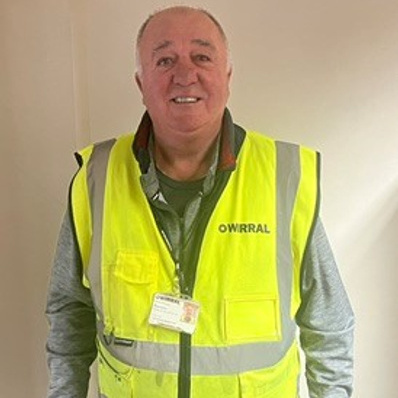
Mark Collier

Mark Cooper

Martyn Dove


Richard Webster
Steve Long
Terry Hall
2025 Upgrades

David Boud

Jenson Park

Karen Purcell

Kevin Hill
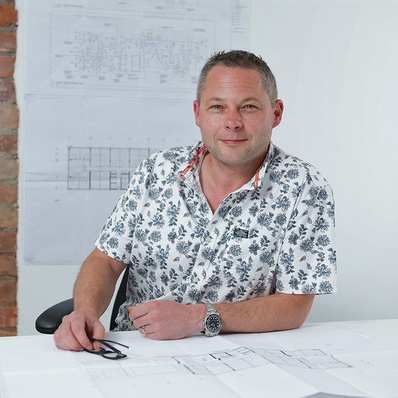
Lee Gunner
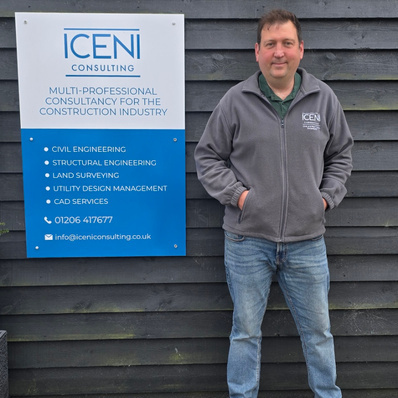
Michael Pearce

Rebecca Hatch

Sangeeth Sandrassegarane
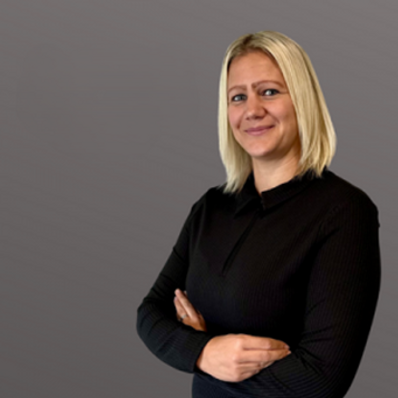
Sarah Reynolds
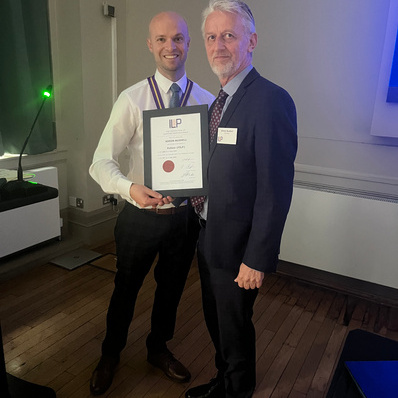
Simon Bushell

Simon Hobbs

Tong Wang

Victoria Kocollari