International Women's Day: Life as a Female Electrical Engineer
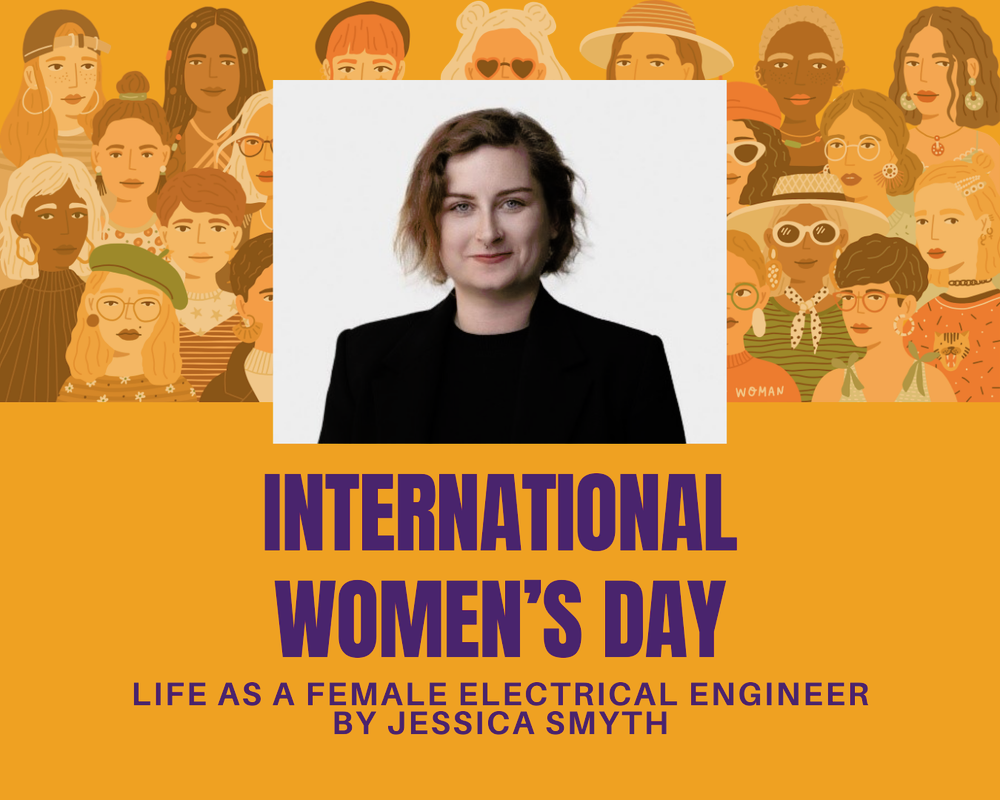
Jessica Smyth is a Senior Electrical Engineer at Varming Consulting Engineers Ltd. With over a decade of experience in the engineering sector, Jessica has worked in a range of sectors, including commercial, industrial, residential, public realms and government projects. Jessica has been a member of the ILP for over 5 years and is part of the Irish Region and the WLP.
The Engineer
The role of engineer would have, to me, generally been identified as male-dominated when growing up, whereas other sectors in construction may differ, being more female/male, e.g., Architecture or Project Management. The engineering disciplines can sometimes be pigeon-holed into gender-biased roles.
This rang true for me, having completed my Engineering degree in DIT (Dublin Institute of Technology, now Technical University Dublin) and being 1 of 10 women in a class of almost 100 students and then transitioning into Building Services Engineering, being the lone woman in a class of 15.
This hadn’t differed much on entering my first job in the industry; I was not the only female within the company, but the only female electrical engineer. It would be 7 years before I worked in a company with more than myself as a female electrical engineer, though working beside many female mechanical engineers and support staff.
The Female Engineer
As an electrical engineer, my role is interlinked with many aspects of design and construction, most of which are obvious due to being on a design team, including landscape/interior architecture and on-site design/coordination with contractors, among others. Then, as a woman, even more so in terms of the functionality of certain spaces within some design aspects.
This functionality can also stretch to any site compound or site set-up for the construction period. Toilet facilities for women, in some instances, leave little to be desired, hidden away behind other cabins (not ideal in darker months), or essentially non-existent or non-maintained. Likely due to the majority of contractors' personnel being men for the duration of the project.
But we have seen an increasing number of women enter the industry across all facets, though still being in the minority. We even see this in commercial fit-outs that already have pre-existing facilities. One bank of toilets will be kept live, generally the female ones (points there!), though they would not be maintained as such – sanitary bins or sanitary products? Not something thought of in a lot of sites throughout Ireland. Though this does appear to be implemented in some UK sites.
The Female Versus Male Approach
There are some instances where “a woman’s touch” would perhaps make things a bit more end-user-friendly. On a particular project, high-end apartments & duplexes, I worked with a fellow mechanical engineer and close friend (also a woman) in a team of mostly men.
This included the construction team and design team; the one other female on the project was the C&S engineer, an anomaly herself in her sector and dissimilar to most other projects I had previously been on. In the final install stages of the project, I began noticing certain elements (some men) may not take into consideration, such as interior furnishings that appeared not be easily accessible.
These included kitchen cabinets without standard handles/knobs i.e., top side indents, or the guest toilet door, which also included a flush-type handle due to it being a sliding door. What, you may ask, was the issue with any of these door types? Send in any person who, like myself, enjoys longer in length fingernails and watch them scramble with these cabinets, or trap themselves in the guest toilet!
While the above “issues” can be minor in many aspects to people, they shouldn’t be dismissed, considering women are approximately 50.5% of the population of Ireland, as of 2024. The likelihood of a woman living in any of these homes is high, and the threat of having your nails done shouldn’t be a reason you can’t use your home as it should be able to be used, given the high-end finish on these homes – one can be assured the cost to rent or buy is not in a low price band.
Further Highlighting Women in Construction
The Construction industry as a whole is generally seen as male-dominated, but the industries within have been highlighting the presence of women throughout the years, with the likes of WiBSE (Women in Building Services Engineering, part of CiBSE) or the WLP (Women Lighting Professionals, part of the ILP).
Being in the industry for the past decade, I have been on fully male Design & Construction teams as well as majority female Design Teams. WiBSE promote female led & accessible events to highlight women in engineering, and the WLP are promoting the group as Women in Lighting, though it is open to allies (men or non-female identifying persons).
Something which needs to be highlighted is that “Women only” societies, such as the two mentioned, are open to male membership as they are not a closed-off for women only.
A Question for the Industry...
Are we as a whole moving fast enough in developing the facilities or thought processes to cope with the increase in female presence?